
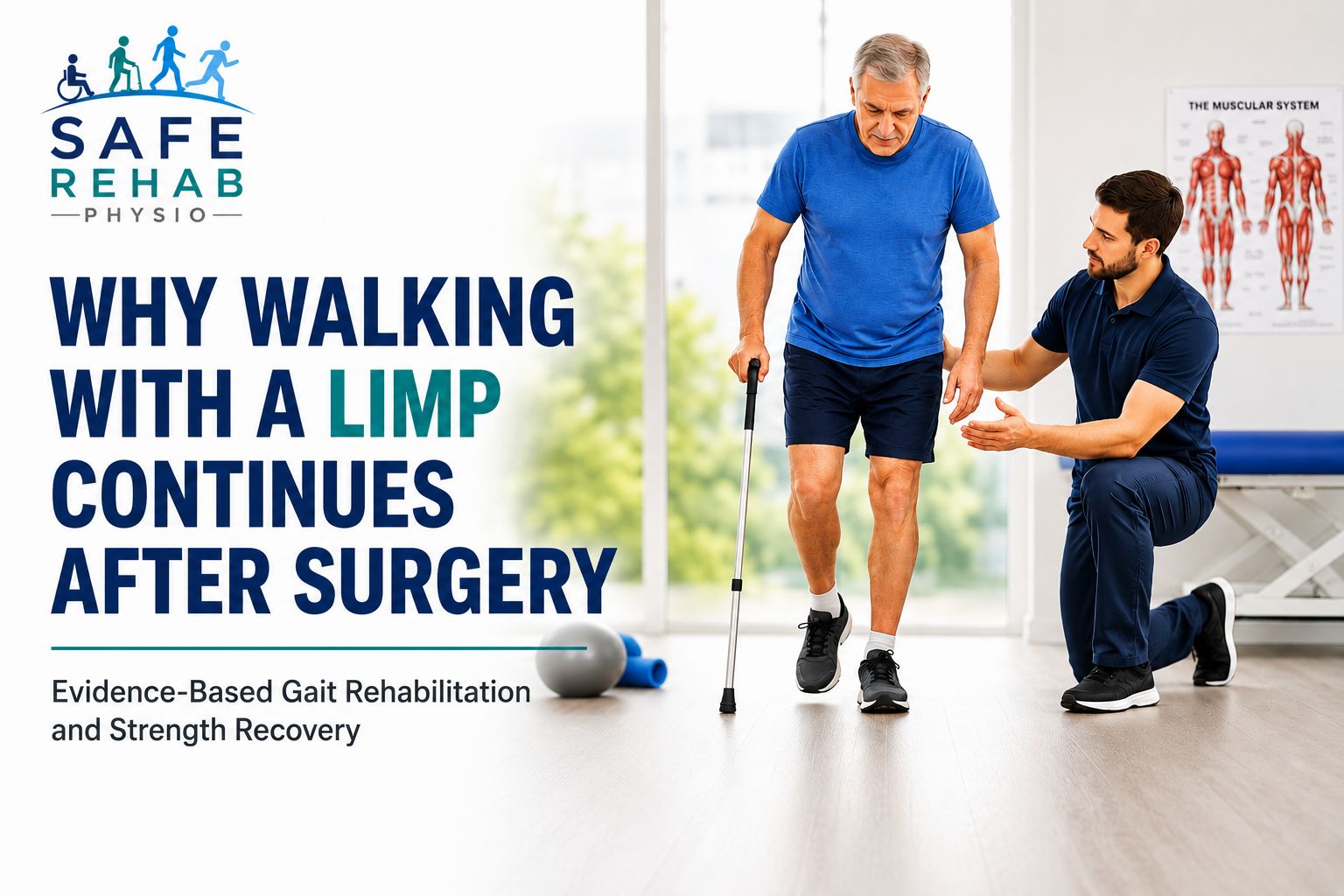
Why Walking With a Limp Continues After Surgery: Evidence-Based Gait Rehabilitation and Strength Recovery
Many patients expect walking to return to normal quickly after surgery. However, even months later, some people continue to walk with a limp despite successful healing on scans or X-rays.
This can happen after:
- Knee replacement surgery
- Hip replacement surgery
- Fracture surgery
- Ligament reconstruction
- Tendon repairs
- Spinal surgery
- Prolonged hospital stays
A persistent limp is not always caused by damage or failed surgery. In many cases, the body develops weakness, stiffness, altered movement patterns, reduced confidence, and balance problems that continue affecting walking long after tissues have healed.
The good news is that evidence-based physiotherapy rehabilitation can often improve walking quality, strength, balance, and confidence significantly.
Why Does Limping Continue After Surgery?
Walking is a highly coordinated activity involving muscles, joints, balance systems, nerves, confidence, timing, and weight transfer. After surgery, several problems can disrupt normal walking patterns.
Common causes include:
- Muscle weakness
- Joint stiffness
- Pain avoidance
- Swelling
- Fear of movement
- Reduced balance
- Poor walking habits
- Loss of confidence
- Reduced endurance
- Poor muscle activation
Even when pain improves, the brain may continue using protective walking patterns learned during the painful period. This is why some patients continue limping even after healing progresses.
Muscle Inhibition After Surgery
One of the biggest reasons limping continues is muscle inhibition. After surgery, swelling and pain reduce the ability of muscles to activate properly.
This commonly affects:
- Quadriceps after knee surgery
- Gluteal muscles after hip surgery
- Calf muscles after ankle surgery
When muscles do not activate effectively, walking becomes uneven, weight transfer becomes poor, balance reduces, and fatigue increases, ultimately leading to a limp. Research shows that muscle weakness may continue for several months after surgery without proper rehabilitation.
Hip and Knee Weakness
Weak hip and knee muscles are major contributors to abnormal walking patterns. Weakness can cause:
- Reduced stability
- Knee collapse inward
- Reduced push-off while walking
- Shortened step length
- Difficulty climbing stairs
- Slower walking speed
Hip abductor weakness is especially important because these muscles stabilise the pelvis during walking. When weak, patients may lean sideways while walking or develop a Trendelenburg gait pattern. (For specific advice on hip recovery, see our guide on the best home exercises after hip replacement surgery).
Balance Problems After Surgery
Balance often declines significantly after surgery. This may occur because of reduced activity, pain, muscle weakness, swelling, fear of movement, and reduced joint awareness.
Patients may become hesitant during walking and avoid placing full weight through the operated leg. This leads to:
- Uneven walking
- Reduced walking confidence
- Slow gait
- Increased fall risk
Balance retraining is therefore a major part of rehabilitation. If you are concerned about stability, particularly for older adults, read more about how to prevent falls in elderly people at home.
Pain Avoidance Walking Patterns
Many patients unconsciously develop protective walking habits. Common examples include:
- Avoiding full weight-bearing
- Shortening step length
- Walking slowly
- Leaning away from pain
- Reduced knee bending
- Stiff-legged walking
Initially, these patterns may reduce discomfort. However, over time they can create persistent limping, muscle tightness, joint stiffness, poor movement habits, and secondary pain in hips or back. Even after pain improves, the nervous system may continue using these protective patterns automatically.
Scar Tissue and Joint Stiffness
Joint stiffness is another common reason for limping. After surgery, reduced movement and swelling may lead to tight muscles, reduced joint mobility, scar tissue formation, and reduced flexibility.
This may affect:
- Knee bending and straightening
- Hip extension
- Ankle movement
Even small movement restrictions can alter walking mechanics significantly. For example, a loss of knee extension often causes persistent limping, reduced hip extension may shorten the walking stride, and reduced ankle movement may affect push-off. Early mobility exercises are important to reduce stiffness. You can learn more about why early physiotherapy after surgery improves recovery on our blog.
Why Walking Retraining Is Important
Walking does not automatically normalise once pain reduces. The brain and muscles must relearn efficient walking patterns. This process is called gait retraining.
Physiotherapists assess:
- Step length
- Walking symmetry
- Weight transfer
- Knee control
- Pelvic stability
- Walking speed
- Balance reactions
- Walking confidence
Gait retraining often includes mirror feedback, weight shifting exercises, step practice, walking drills, treadmill retraining, balance exercises, and functional mobility training. Research supports task-specific walking rehabilitation to improve gait quality after surgery.
Evidence-Based Strengthening Exercises
Strengthening is essential to improve walking mechanics. Common rehabilitation exercises include:
1. Sit-to-Stand Practice
- Benefits: Improves leg strength, transfers, and functional mobility.
- How to perform: Sit in a stable chair. Stand slowly, sit back down with control, and repeat 8–12 repetitions.
2. Straight Leg Raises
- Benefits: Improves quadriceps strength, knee control, and supports walking recovery.
- How to perform: Keep the knee straight, lift the leg slowly upward, and lower with control.
3. Heel Raises
- Benefits: Improves calf strength, push-off during walking, and balance.
- How to perform: Hold onto a support, rise onto your toes, and lower slowly.
4. Side Leg Raises
- Benefits: Strengthens hip stabilisers, improves pelvic control, and reduces limping.
- How to perform: Hold onto a support, lift the leg sideways slowly, and keep the trunk upright.
5. Step-Up Exercises
- Benefits: Improves stair climbing, balance, and functional strength.
- How to perform: Step onto a low step, step down slowly, and repeat with control.
Functional Rehabilitation
Recovery is not only about exercises. Patients also need functional retraining for walking outdoors, turning safely, stair climbing, navigating uneven surfaces, transfers, endurance, and overall confidence. Functional rehabilitation helps patients return to normal daily activities more safely.
Importance of Confidence in Recovery
Fear of movement is extremely common after surgery. Many patients worry about damaging the joint, falling, increasing pain, or reinjury.
This fear often reduces movement and slows recovery. Evidence-based rehabilitation uses gradual exposure to movement to rebuild confidence safely. As strength and walking improve, confidence usually improves as well.
When Should You Seek Physiotherapy?
You should consider a professional physiotherapy assessment if you have:
- Persistent limping
- Difficulty walking normally
- Reduced balance or weakness
- Difficulty climbing stairs
- Persistent stiffness
- Uneven walking
- Fear of weight-bearing
- Ongoing swelling
- Reduced confidence
Early intervention often helps prevent long-term walking problems. If you are unsure if you need help, read our guide on signs you may need home physiotherapy.
When Further Medical Review May Be Needed
Sometimes additional medical assessment is important. Seek medical review if limping is associated with severe swelling, sudden worsening pain, fever, redness, joint instability, locking, severe weakness, or a progressive loss of movement. These symptoms may require further investigation.
Final Thoughts
Persistent limping after surgery is common and does not always mean the surgery has failed. Walking problems often continue because of weakness, stiffness, balance deficits, fear of movement, poor walking mechanics, and muscle inhibition.
Evidence-based physiotherapy rehabilitation can help improve walking quality, strength, balance, confidence, endurance, and functional independence. With structured rehabilitation and progressive movement retraining, many patients can gradually regain safer and more efficient walking patterns.
SAFE REHAB PHYSIO
Professional home physiotherapy services helping patients improve:
- Walking rehabilitation & Gait retraining
- Post-surgical recovery
- Strength & Balance
- Mobility & Falls prevention
- Confidence & Functional independence
Serving patients across Berkshire, Buckinghamshire, Herefordshire and surrounding areas in the UK. See our locations.
Evidence-Based Information
This article is based on evidence-based physiotherapy guidelines and internationally recognised gait rehabilitation and post-surgical recovery research.
References
- American Physical Therapy Association (APTA) Clinical Practice Guidelines
- Journal of Orthopaedic & Sports Physical Therapy (JOSPT) Gait Rehabilitation Research
- NICE Rehabilitation After Joint Replacement Guidelines
- Cochrane Review on Post-Surgical Physiotherapy Rehabilitation
- American Academy of Orthopaedic Surgeons (AAOS) Recovery Guidelines
- Evidence-Based Rehabilitation Following Total Knee Arthroplasty Studies
- Physiotherapy Rehabilitation Following Hip and Knee Surgery Research
- World Health Organization Rehabilitation Guidelines
- CDC Physical Activity and Recovery Recommendations
- Research on Muscle Inhibition and Functional Recovery After Surgery
Need Professional Home Physiotherapy?
Safe Rehab Physio provides expert home physiotherapy for post-operative recovery, post-fracture rehabilitation, pre-op conditioning, elderly mobility and falls prevention.