
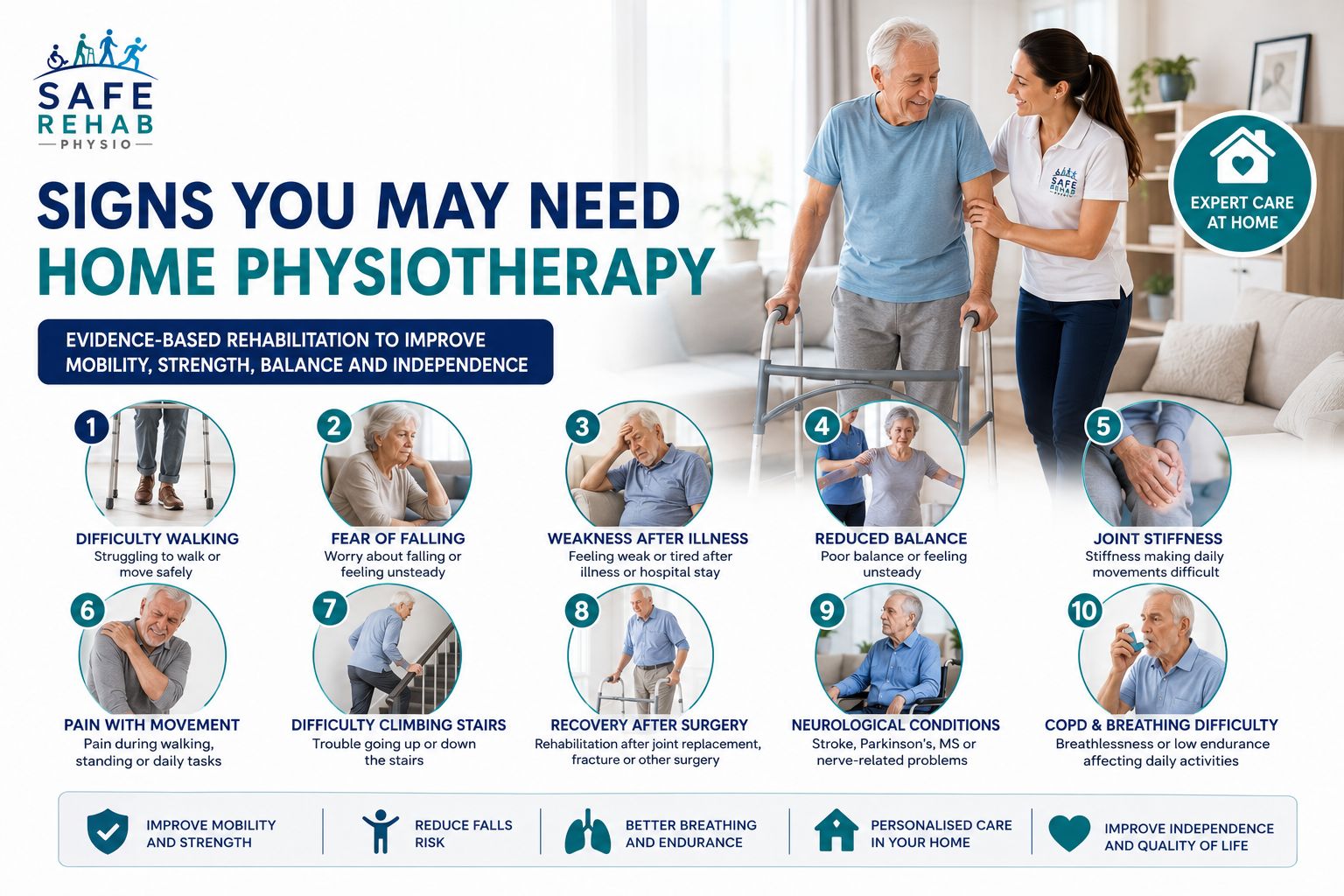
Evidence-Based Rehabilitation to Improve Mobility, Strength, Balance and Independence at Home
Many people delay physiotherapy because they believe their symptoms are “just part of ageing,” temporary weakness, or something that will improve on its own.
However, problems such as difficulty walking, weakness, poor balance, pain, stiffness, or reduced confidence can gradually worsen without proper rehabilitation.
Home physiotherapy provides evidence-based treatment in the comfort and safety of your own home, helping patients improve mobility, strength, balance, confidence, breathing, and independence.
Research shows that early physiotherapy intervention may help reduce physical decline, improve recovery, reduce falls, and improve quality of life.
What Is Home Physiotherapy?
Home physiotherapy involves professional rehabilitation assessment and treatment delivered at home.
This is especially helpful for people who struggle to attend clinics because of:
- Reduced mobility
- Pain
- Weakness
- Surgery recovery
- Falls risk
- Neurological conditions
- Breathing difficulties
- Fatigue
- Elderly frailty
Treatment is personalised based on the patient’s condition, goals, mobility level, and home environment.
Difficulty Walking
One of the most common signs that someone may benefit from physiotherapy is difficulty walking.
This may include:
- Slower walking
- Shuffling gait
- Unsteady walking
- Needing furniture support
- Reduced walking distance
- Dragging feet
- Difficulty turning
- Reduced confidence outdoors
Walking problems may develop because of:
- Muscle weakness
- Joint pain
- Reduced balance
- Neurological conditions
- Surgery recovery
- Arthritis
- Deconditioning after illness
Evidence-based physiotherapy may help improve:
- Walking pattern
- Strength
- Endurance
- Balance
- Mobility confidence
Fear of Falling
Many elderly people become fearful after:
- A previous fall
- Near-falls
- Illness
- Surgery
- Weakness
- Reduced balance
Fear of falling often causes people to move less, which may lead to:
- More weakness
- Reduced balance
- Reduced independence
- Increased falls risk
Research strongly supports balance rehabilitation and strengthening exercises for falls prevention.
Home physiotherapy can help improve:
- Confidence
- Balance reactions
- Safe walking
- Mobility indoors and outdoors
- Functional independence
Weakness After Illness or Hospital Stay
Many patients experience significant weakness after:
- Surgery
- Chest infections
- COVID-19
- Hospital admission
- Bed rest
- Serious illness
Even short periods of inactivity can lead to:
- Muscle weakness
- Reduced walking ability
- Poor endurance
- Balance problems
- Fatigue
This is especially common in older adults.
Physiotherapy rehabilitation may help improve:
- Strength
- Functional mobility
- Transfers
- Walking
- Endurance
- Independence
Reduced Balance
Balance problems are extremely common and should not be ignored.
Common signs include:
- Feeling unsteady
- Holding furniture while walking
- Difficulty turning
- Fear of stairs
- Loss of confidence outdoors
- Poor coordination
- Swaying while standing
Reduced balance may increase falls risk significantly.
Evidence-based balance rehabilitation may include:
- Standing balance exercises
- Weight transfer training
- Walking practice
- Strengthening exercises
- Functional mobility training
Joint Stiffness
Stiff joints may make simple daily activities difficult.
Common problems include:
- Difficulty bending knees
- Stiff hips
- Painful shoulders
- Difficulty standing upright
- Reduced walking movement
Joint stiffness often develops because of:
- Arthritis
- Surgery
- Reduced movement
- Pain
- Inactivity
- Prolonged sitting
Physiotherapy may help improve:
- Joint mobility
- Flexibility
- Functional movement
- Walking ability
- Confidence
Pain with Movement
Pain during movement should not always be ignored.
Many people experience pain while:
- Walking
- Standing
- Climbing stairs
- Reaching overhead
- Getting out of chairs
- Turning in bed
Pain may reduce activity levels, leading to:
- Weakness
- Stiffness
- Reduced mobility
- Reduced fitness
- Reduced confidence
Evidence-based physiotherapy may help improve:
- Movement quality
- Joint mobility
- Muscle strength
- Functional activity tolerance
Difficulty Climbing Stairs
Stair difficulty is often an early sign of:
- Muscle weakness
- Reduced balance
- Joint pain
- Reduced endurance
- Neurological problems
Patients may notice:
- Pulling heavily on railings
- Needing frequent rests
- Fear of stairs
- Knee weakness
- Poor coordination
Physiotherapists may help improve:
- Leg strength
- Balance
- Stair confidence
- Walking control
- Functional independence
Recovery After Surgery
Many patients need rehabilitation after:
- Knee replacement
- Hip replacement
- Fracture surgery
- Spinal surgery
- Shoulder surgery
- Abdominal surgery
Without proper rehabilitation, patients may develop:
- Weakness
- Stiffness
- Poor walking
- Reduced confidence
- Functional decline
Evidence strongly supports early rehabilitation after surgery.
Home physiotherapy may help improve:
- Walking recovery
- Strength
- Mobility
- Pain management
- Confidence
- Functional independence
Neurological Conditions
Home physiotherapy is often beneficial for neurological conditions such as:
- Stroke
- Parkinson’s disease
- Multiple sclerosis
- Peripheral neuropathy
- Balance disorders
- Mobility decline
Neurological conditions may affect:
- Walking
- Coordilation
- Balance
- Strength
- Transfers
- Functional activities
Physiotherapy rehabilitation may include:
- Gait re-education
- Strengthening exercises
- Balance training
- Functional rehabilitation
- Mobility retraining
- Falls prevention
COPD and Breathing Difficulties
Breathing problems can significantly affect mobility and quality of life.
People with COPD and respiratory conditions may experience:
- Breathlessness
- Fatigue
- Reduced walking tolerance
- Weakness
- Reduced endurance
- Difficulty climbing stairs
Evidence-based physiotherapy and pulmonary rehabilitation may help improve:
- Breathing efficiency
- Exercise tolerance
- Mobility
- Functional independence
- Confidence with activity
Treatment may include:
- Breathing exercises
- Walking programmes
- Strengthening exercises
- Endurance training
- Energy conservation strategies
Benefits of Home Physiotherapy
Home physiotherapy offers several important advantages:
- Treatment in familiar surroundings
- Personalised rehabilitation
- Functional mobility training
- Reduced travel stress
- Safer assessment of home mobility
- Stair assessment
- Falls prevention advice
- Individual treatment plans
It is especially helpful for:
- Elderly patients
- Post-operative patients
- Neurological patients
- People with reduced mobility
- Patients fearful of leaving home
Evidence-Based Physiotherapy Approaches
Research supports physiotherapy rehabilitation for improving:
- Mobility
- Balance
- Walking ability
- Strength
- Functional independence
- Confidence
- Falls prevention
- Recovery after surgery and illness
Treatment programmes commonly include:
- Strengthening exercises
- Balance training
- Walking rehabilitation
- Mobility retraining
- Functional exercises
- Breathing exercises
- Stair practice
- Falls prevention education
When Should You Contact a Physiotherapist?
You should consider physiotherapy assessment if you or a family member experiences:
- Difficulty walking
- Reduced balance
- Falls or near-falls
- Weakness after illness
- Pain with movement
- Difficulty climbing stairs
- Reduced confidence
- Joint stiffness
- Recovery after surgery
- Neurological mobility problems
- Breathing difficulties affecting mobility
Early intervention often helps prevent further decline and improve long-term independence.
Final Thoughts
Reduced mobility, weakness, pain, balance problems, and breathing difficulties should not simply be accepted as part of ageing.
Evidence-based physiotherapy rehabilitation can help improve:
- Walking
- Strength
- Balance
- Confidence
- Mobility
- Functional independence
- Quality of life
Home physiotherapy provides safe, personalised rehabilitation in the comfort of your own home, helping patients regain confidence and improve everyday function.
SAFE REHAB PHYSIO
Professional home physiotherapy services helping patients improve:
- Mobility
- Walking ability
- Balance
- Strength
- Falls prevention
- Neurological rehabilitation
- Post-operative recovery
- Respiratory rehabilitation
- Functional independence
Serving patients across Berkshire, Buckinghamshire, Herefordshire and surrounding areas in the UK.
Evidence-Based Information
This article is based on evidence-based physiotherapy guidelines and internationally recognised rehabilitation research.
📚 References
- NICE Rehabilitation and Physiotherapy Guidelines
- Chartered Society of Physiotherapy (CSP) Rehabilitation Guidance
- World Health Organization Rehabilitation Guidelines
- American Physical Therapy Association (APTA) Clinical Practice Guidelines
- CDC Falls Prevention Recommendations
- Cochrane Review on Physiotherapy Rehabilitation
- Journal of Orthopaedic & Sports Physical Therapy (JOSPT) Research
- Pulmonary Rehabilitation Guidelines for COPD
- Stroke Rehabilitation Clinical Guidelines
- Evidence-Based Physiotherapy and Functional Rehabilitation Research
Need Professional Home Physiotherapy?
Safe Rehab Physio provides expert home physiotherapy for post-operative recovery, post-fracture rehabilitation, pre-op conditioning, elderly mobility and falls prevention.