
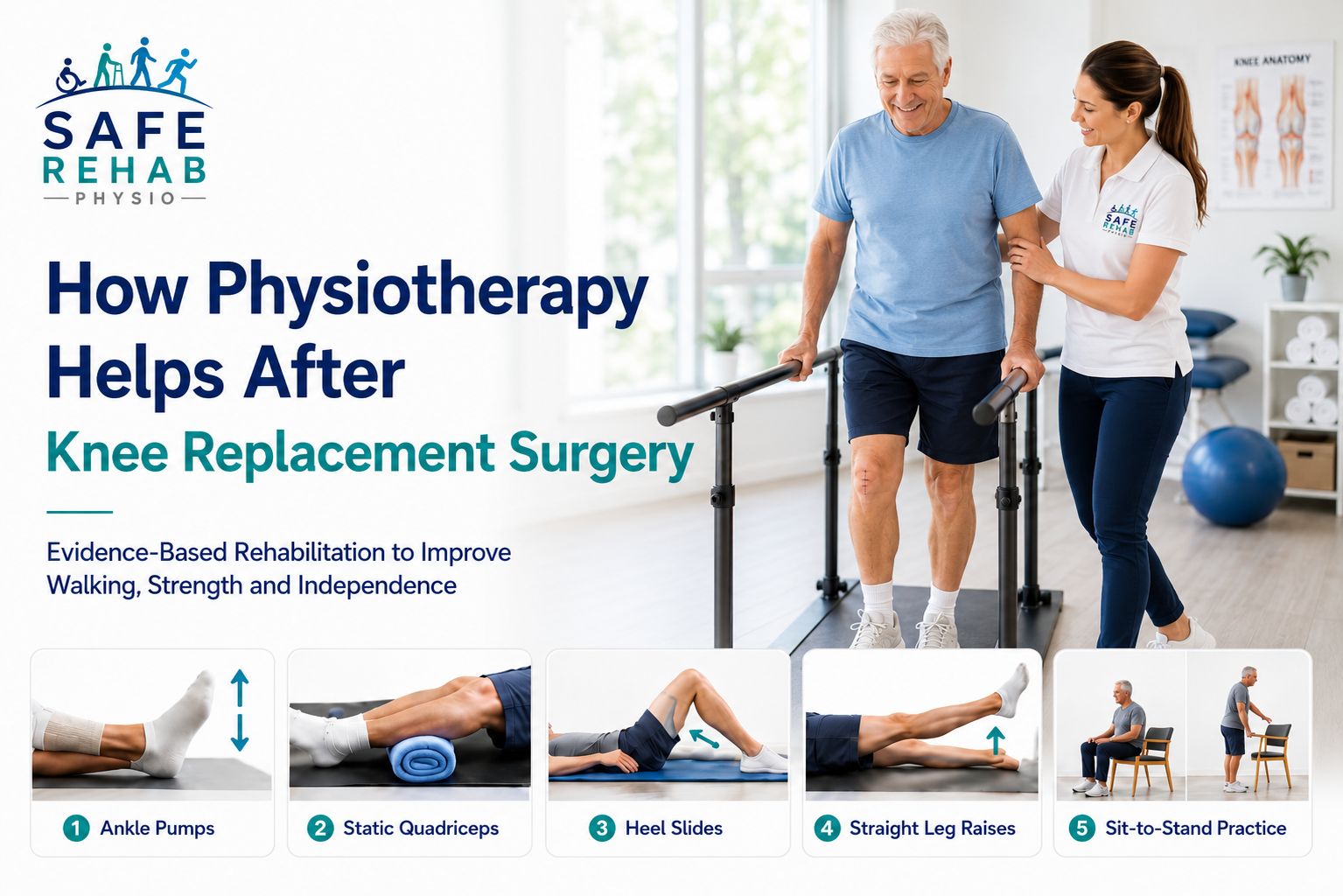
Evidence-Based Rehabilitation to Improve Walking, Strength and Independence
Total Knee Replacement (TKR) surgery can significantly improve pain, mobility, and quality of life for people with severe knee arthritis.
However, surgery alone does not restore normal movement automatically.
Recovery depends greatly on:
- Physiotherapy
- Early movement
- Strengthening exercises
- Walking rehabilitation
- Swelling management
- Consistent rehabilitation
Many patients struggle with:
- Knee stiffness
- Pain
- Swelling
- Weakness
- Difficulty walking
- Fear of movement
- Reduced confidence
The good news is that evidence-based physiotherapy rehabilitation can help patients regain mobility, improve strength, reduce stiffness, and return to daily activities safely.
What Happens After Knee Replacement Surgery?
During knee replacement surgery, damaged joint surfaces are replaced with artificial components.
Although the surgery improves joint mechanics, the body still needs time to recover from:
- Surgical trauma
- Swelling
- Pain
- Muscle weakness
- Reduced movement
- Tissue healing
Immediately after surgery, many patients notice:
- Knee swelling
- Difficulty bending the knee
- Weakness
- Pain while walking
- Reduced balance
- Difficulty standing from chairs
- Stiffness
This is completely normal during the early recovery stage.
Common Problems After Knee Replacement
Some of the most common challenges after TKR include:
- Knee stiffness
- Swelling
- Reduced knee bending
- Difficulty straightening the knee
- Pain during walking
- Muscle weakness
- Balance problems
- Slow walking
- Difficulty climbing stairs
- Fear of movement
- Reduced endurance
Without proper rehabilitation, these problems may continue for months.
Why Does Stiffness Develop After Surgery?
Stiffness is one of the biggest concerns after knee replacement.
This happens because of:
- Swelling
- Pain
- Scar tissue formation
- Reduced movement
- Muscle tightness
- Fear of bending the knee
If movement is delayed for too long, the knee may become progressively tighter.
Early controlled movement is extremely important to maintain:
- Knee flexibility
- Joint mobility
- Muscle activation
- Walking ability
Importance of Early Movement After TKR
Research strongly supports early mobilisation after knee replacement surgery.
Early movement helps:
- Reduce stiffness
- Improve circulation
- Reduce blood clot risk
- Improve muscle activation
- Improve walking ability
- Improve confidence
- Reduce hospital stay length
Movement is progressed gradually depending on:
- Pain levels
- Swelling
- Surgical advice
- Strength
- Balance
The key is safe guided rehabilitation.
Older adults recovering after surgery may benefit from specialised elderly physiotherapy support to improve mobility, balance, and confidence during recovery.
Evidence-Based Physiotherapy After Knee Replacement
Physiotherapy plays a major role in recovery after TKR.
Research shows rehabilitation may help improve:
- Knee movement
- Walking
- Strength
- Balance
- Confidence
- Functional independence
Treatment programmes commonly include:
- Range of movement exercises
- Strengthening exercises
- Walking practice
- Gait re-education
- Balance training
- Functional rehabilitation
- Stair practice
- Swelling management
Professional home physiotherapy rehabilitation can significantly improve walking confidence and daily function after surgery.
Safe Exercises After Knee Replacement Surgery
Exercises should be:
- Gentle
- Controlled
- Regular
- Progressive
Consistency is extremely important during recovery.
1. Ankle Pumps
How to perform:
- Move ankles up and down repeatedly
Benefits:
- Improves circulation
- Reduces swelling
- Helps prevent blood clots
2. Static Quadriceps Exercises
How to perform:
- Tighten front thigh muscles
- Push knee gently downward
- Hold for 5–10 seconds
Benefits:
- Improves muscle activation
- Helps knee stability
- Reduces weakness
3. Heel Slides
How to perform:
- Slide heel toward buttocks slowly
- Bend knee comfortably
- Slide back down
Benefits:
- Improves knee bending
- Reduces stiffness
- Improves mobility
4. Straight Leg Raises
How to perform:
- Keep knee straight
- Lift leg slowly upward
- Lower with control
Benefits:
- Strengthens quadriceps
- Improves control
- Helps walking
5. Sit-to-Stand Practice
How to perform:
- Stand from a chair slowly
- Sit back down with control
Benefits:
- Improves leg strength
- Improves transfers
- Improves independence
Walking Progression After Knee Replacement
Walking rehabilitation is extremely important.
Most patients progress through:
Early Stage
- Walking frame or crutches
Intermediate Stage
- Walking stick
Later Stage
- Independent walking
Walking progression focuses on:
- Improving confidence
- Improving balance
- Normalising walking pattern
- Improving endurance
Physiotherapists help retrain:
- Heel strike
- Knee control
- Weight transfer
- Walking symmetry
Falls prevention strategies are also important during rehabilitation, especially for elderly patients recovering at home.
Pain and Swelling Management
Some swelling and discomfort are expected after surgery.
Evidence-based swelling management includes:
- Elevation
- Ice therapy
- Gentle movement
- Compression (if advised)
- Regular exercises
- Walking progression
Managing swelling is important because excessive swelling may contribute to:
- Pain
- Muscle inhibition
- Reduced movement
- Stiffness
Benefits of Home Physiotherapy After Knee Replacement
Home physiotherapy can be extremely helpful, especially during early recovery.
Benefits include:
- Rehabilitation in familiar surroundings
- Reduced travel stress
- Safer mobility training
- Personalised treatment
- Functional home assessment
- Confidence building
- Stair practice at home
- Individual rehabilitation programmes
Home physiotherapy is especially useful for:
- Elderly patients
- Patients with reduced mobility
- Patients fearful of walking outdoors
- Patients recovering alone at home
Patients experiencing elderly weakness after hospital discharge may also benefit from professional physiotherapy support and guided rehabilitation at home.
Recovery Timeline After Knee Replacement
Recovery varies between individuals.
However, general recovery expectations may include:
Week 1–2
Common findings:
- Swelling
- Pain
- Difficulty walking
- Reduced knee movement
Goals:
- Safe transfers
- Basic walking
- Pain management
- Early exercises
Week 3–6
Common progress:
- Improved walking
- Improved knee bending
- Reduced swelling
Goals:
- Increase strength
- Improve walking distance
- Improve stairs
- Improve confidence
Week 6–12
Common progress:
- Improved independence
- Better mobility
- Improved endurance
Goals:
- Functional rehabilitation
- Balance training
- Outdoor walking
- Return to activities
3–6 Months
Many patients continue improving with:
- Strength
- Walking
- Confidence
- Endurance
- Function
Recovery continues gradually over time.
Dos and Don’ts After Knee Replacement
Dos
- Follow physiotherapy advice
- Perform exercises regularly
- Walk consistently
- Elevate the leg
- Use walking aids correctly
- Gradually increase activity
- Practice knee bending and straightening
- Maintain good posture
Don’ts
- Avoid prolonged bed rest
- Do not stop exercises completely
- Avoid aggressive twisting movements
- Avoid overexertion early on
- Do not ignore excessive swelling
- Avoid comparing recovery with others
- Do not rush healing
When Should You Seek Professional Help?
You should seek physiotherapy assessment if you experience:
- Severe stiffness
- Difficulty bending the knee
- Persistent swelling
- Difficulty walking
- Poor balance
- Increased pain
- Reduced confidence
- Difficulty with stairs
- Slow recovery progression
Early intervention often improves long-term outcomes.
Final Thoughts
Knee replacement surgery is only one part of recovery.
Physiotherapy rehabilitation plays a major role in helping patients regain:
- Mobility
- Strength
- Walking ability
- Confidence
- Independence
Evidence-based rehabilitation, guided exercises, and progressive walking training can significantly improve recovery outcomes after TKR.
Early movement and consistent physiotherapy often lead to the best long-term results.
Need personalised rehabilitation support after knee replacement surgery? Contact Safe Rehab Physio for professional home physiotherapy services.
SAFE REHAB PHYSIO
Professional home physiotherapy services helping patients improve:
- Knee replacement rehabilitation
- Walking ability
- Strength
- Balance
- Knee stiffness
- Mobility
- Confidence
- Functional independence
- Rehabilitation at home
Serving patients across Berkshire, Buckinghamshire, Herefordshire and surrounding areas in the UK.
Need Professional Home Physiotherapy?
Safe Rehab Physio provides expert home physiotherapy for post-operative recovery, post-fracture rehabilitation, pre-op conditioning, elderly mobility and falls prevention.