
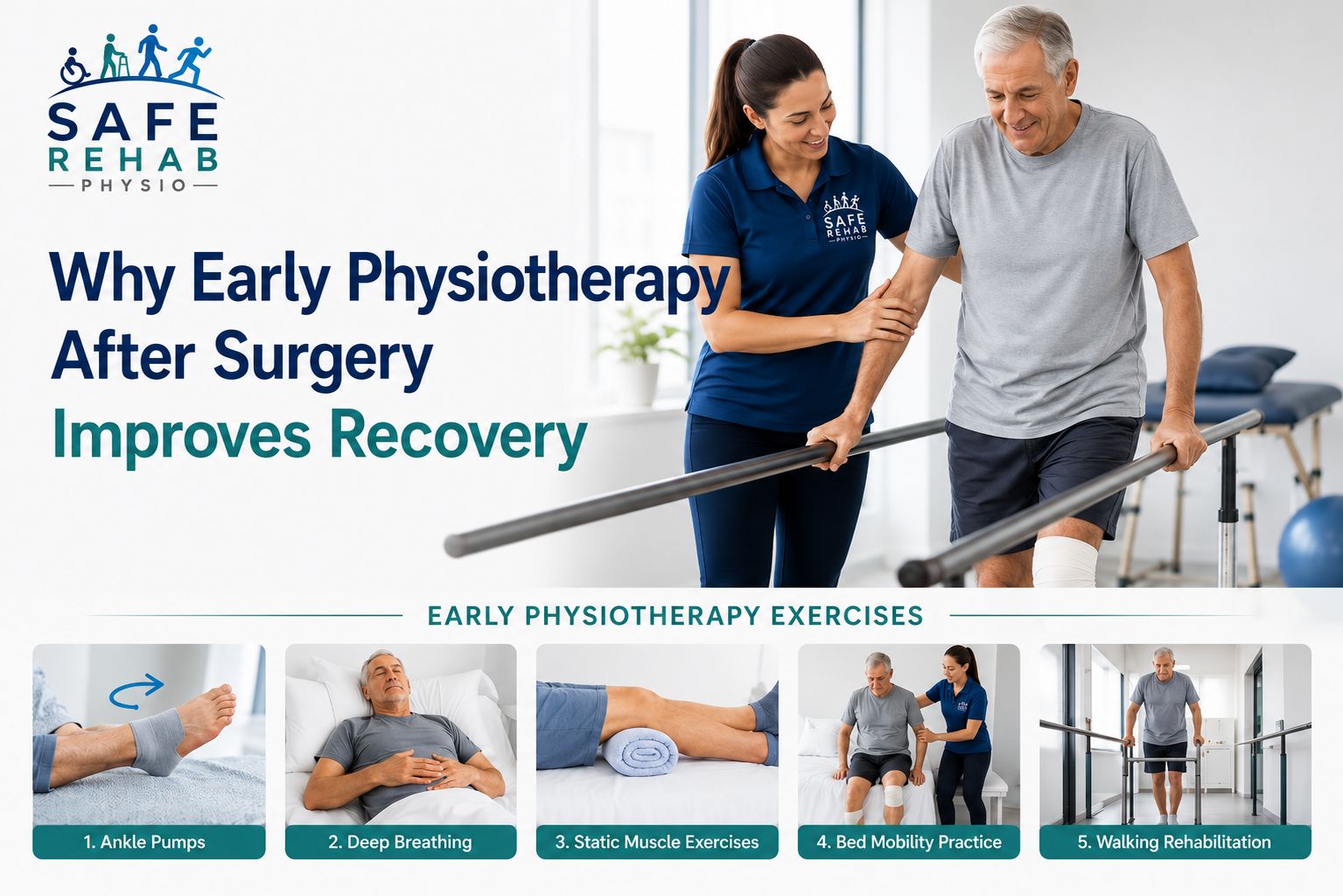
Why Early Physiotherapy After Surgery Improves Recovery
Evidence-Based Rehabilitation to Improve Mobility, Strength and Independence
Early physiotherapy after surgery plays an important role in improving mobility, reducing pain, and helping patients recover faster after surgical procedures through professional post-operative physiotherapy services.
After surgery, many patients expect pain and temporary weakness. However, what many people do not realise is that prolonged bed rest and delayed movement can slow recovery significantly.
Even after successful surgery, patients may develop:
- Muscle weakness
- Joint stiffness
- Swelling
- Reduced walking ability
- Poor balance
- Fatigue
- Reduced confidence
- Breathing complications
Research consistently shows that early physiotherapy and guided rehabilitation can improve recovery, mobility, circulation, confidence, and long-term function after surgery.
Whether the surgery involves:
- Knee replacement
- Hip replacement
- Fracture fixation
- Spinal surgery
- Shoulder surgery
- Abdominal surgery
- Elderly rehabilitation
Early movement and physiotherapy play a major role in helping patients return to normal life safely.
What Happens to the Body After Surgery?
Surgery places stress on the body. Pain, swelling, anaesthesia, bed rest, and fear of movement can all affect recovery.
Many patients naturally reduce movement after surgery because of:
- Pain
- Fatigue
- Fear
- Weakness
- Reduced confidence
However, reduced activity may lead to further physical decline.
Risks of Prolonged Bed Rest
The human body is designed to move. Even short periods of bed rest may cause:
- Rapid muscle weakness
- Joint stiffness
- Reduced circulation
- Poor balance
- Reduced lung function
- Fatigue
- Increased fall risk
- Reduced walking ability
Research shows that muscle strength can reduce surprisingly quickly during inactivity, especially in older adults. Prolonged bed rest may also delay overall recovery.
Muscle Weakness After Surgery
Muscle weakness is extremely common after surgery. This may occur because of:
- Pain inhibition
- Swelling
- Reduced activity
- Bed rest
- Muscle shutdown after surgery
The muscles around the operated area often become weak very quickly.
For example:
- After knee replacement surgery: Quadriceps weakness is common.
- After hip surgery: Hip muscle weakness affects walking and balance.
- After shoulder surgery: Shoulder and scapular muscles may weaken.
Without rehabilitation, weakness may continue to affect mobility and daily function.
Stiffness and Swelling
Swelling is a natural response after surgery. However, excessive swelling may contribute to:
- Pain
- Muscle inhibition
- Reduced movement
- Joint stiffness
Stiffness commonly develops when joints are not moved regularly. This is why controlled movement and guided exercises are extremely important during recovery. Physiotherapy helps patients safely improve movement while protecting healing tissues.
Blood Circulation and Recovery
Early movement improves circulation. Good circulation helps:
- Deliver oxygen to tissues
- Reduce swelling
- Improve healing
- Reduce risk of blood clots
- Improve muscle recovery
Simple exercises such as ankle pumps, walking, leg movements, and deep breathing exercises can significantly improve circulation after surgery.
Breathing Complications After Surgery
After surgery, patients may breathe more shallowly because of pain, fatigue, bed rest, or reduced mobility.
This may increase the risk of:
- Chest infections
- Reduced oxygen levels
- Lung congestion
Physiotherapists often include deep breathing exercises, chest expansion exercises, early walking, and position changes to help improve lung function and reduce complications.
This is particularly important after abdominal surgery, chest surgery, elderly hospital admissions, or long periods of bed rest.
Importance of Guided Movement
Many patients fear movement after surgery. However, safe guided movement is essential.
Physiotherapy helps patients:
- Move safely
- Protect healing tissues
- Improve confidence
- Improve walking
- Reduce stiffness
- Restore normal movement patterns
Movement is progressed gradually depending on surgical precautions, pain levels, healing stage, strength, and mobility goals.
Confidence Building After Surgery
Recovery is not only physical. Many patients become anxious after surgery because they fear:
- Falling
- Damaging the operation
- Pain during movement
- Losing independence
This fear often reduces activity levels further. Physiotherapy helps build confidence by guiding safe movement, improving balance, improving walking, encouraging independence, and educating patients properly. Confidence is an extremely important part of successful rehabilitation.
Functional Rehabilitation
The main goal of physiotherapy is not just exercises; the goal is restoring function.
Functional rehabilitation focuses on helping patients safely return to:
- Walking
- Standing
- Stairs
- Transfers
- Dressing
- Bathing
- Daily activities
- Outdoor mobility
- Work and hobbies
Treatment is individualised depending on the patient’s surgery and goals.
Evidence-Based Physiotherapy After Surgery
Research strongly supports early physiotherapy rehabilitation after surgery. Evidence shows that early rehabilitation may help:
- Improve mobility
- Reduce complications
- Improve walking ability
- Improve circulation
- Reduce stiffness
- Improve muscle strength
- Improve independence
- Reduce hospital stay length
- Improve long-term outcomes
Programmes commonly include mobility exercises, strengthening exercises, balance training, gait re-education, functional rehabilitation, breathing exercises, stair training, and transfer practice.
Common Early Physiotherapy Exercises
1. Ankle Pumps
- Benefits: Improves circulation, helps reduce swelling, and reduces blood clot risk.
2. Deep Breathing Exercises
- Benefits: Improves lung expansion, helps prevent chest complications, and improves oxygen levels.
3. Static Muscle Exercises (e.g., Static quadriceps, Glute squeezes)
- Benefits: Maintains muscle activation and reduces muscle loss.
4. Bed Mobility Practice
- Benefits: Improves independence, helps safe transfers, and reduces fear of movement.
5. Walking Rehabilitation
- Benefits: Improves circulation, improves confidence, and restores functional mobility.
Dos and Don’ts After Surgery Rehabilitation
Dos
- Follow physiotherapy advice
- Move regularly as advised
- Perform exercises consistently
- Maintain good posture
- Use walking aids correctly
- Practice breathing exercises
- Gradually increase activity
- Stay hydrated
- Listen to your body
Don’ts
- Avoid prolonged bed rest unless medically advised
- Do not stop moving completely due to fear
- Avoid sudden jerking movements
- Do not ignore swelling or excessive pain
- Avoid overdoing exercises aggressively
- Do not compare recovery with others
- Avoid poor posture during recovery
- Do not rush healing
Recovery Expectations
Recovery after surgery varies depending on age, surgery type, general health, strength before surgery, pain levels, and rehabilitation consistency.
Many patients gradually improve over weeks and months with physiotherapy, guided exercises, functional rehabilitation, education, and confidence building. Consistency is one of the biggest factors influencing recovery success.
When Should You Seek Physiotherapy?
You should seek physiotherapy if you experience:
- Difficulty walking
- Severe stiffness
- Weakness
- Balance problems
- Reduced confidence
- Swelling
- Difficulty with stairs
- Difficulty standing
- Fear of movement
- Reduced independence after surgery
Early intervention often improves outcomes significantly.
Final Thoughts
Surgery is only one part of recovery. Rehabilitation plays a major role in restoring mobility, strength, confidence, and independence.
Evidence-based physiotherapy helps patients recover safely through guided movement, strengthening, balance training, and functional rehabilitation. Starting rehabilitation early can improve mobility, confidence and independence.
SAFE REHAB PHYSIO
Professional home physiotherapy services helping patients improve:
- Post-operative rehabilitation
- Mobility
- Strength
- Balance
- Walking
- Functional independence
- Falls prevention
- Confidence after surgery
- Rehabilitation at home
Serving patients across Berkshire, Buckinghamshire, Herefordshire and surrounding areas in the UK.
Evidence-Based Information This article is based on evidence-based physiotherapy guidelines and internationally recognised post-operative rehabilitation research.
📚 References
- NICE Post-Operative Rehabilitation Guidelines
- American Physical Therapy Association (APTA) Rehabilitation Guidelines
- Enhanced Recovery After Surgery (ERAS) Society Recommendations
- World Health Organization Rehabilitation Guidelines
- CDC Physical Activity and Recovery Recommendations
- Journal of Orthopaedic & Sports Physical Therapy (JOSPT) Rehabilitation Research
- Evidence-Based Post-Surgical Physiotherapy Research
- Physiotherapy Rehabilitation Following Joint Replacement Studies
- Cochrane Review on Early Mobilisation After Surgery
- American Academy of Orthopaedic Surgeons (AAOS) Recovery Guidelines
Need Professional Home Physiotherapy?
Safe Rehab Physio provides expert home physiotherapy for post-operative recovery, post-fracture rehabilitation, pre-op conditioning, elderly mobility and falls prevention.