
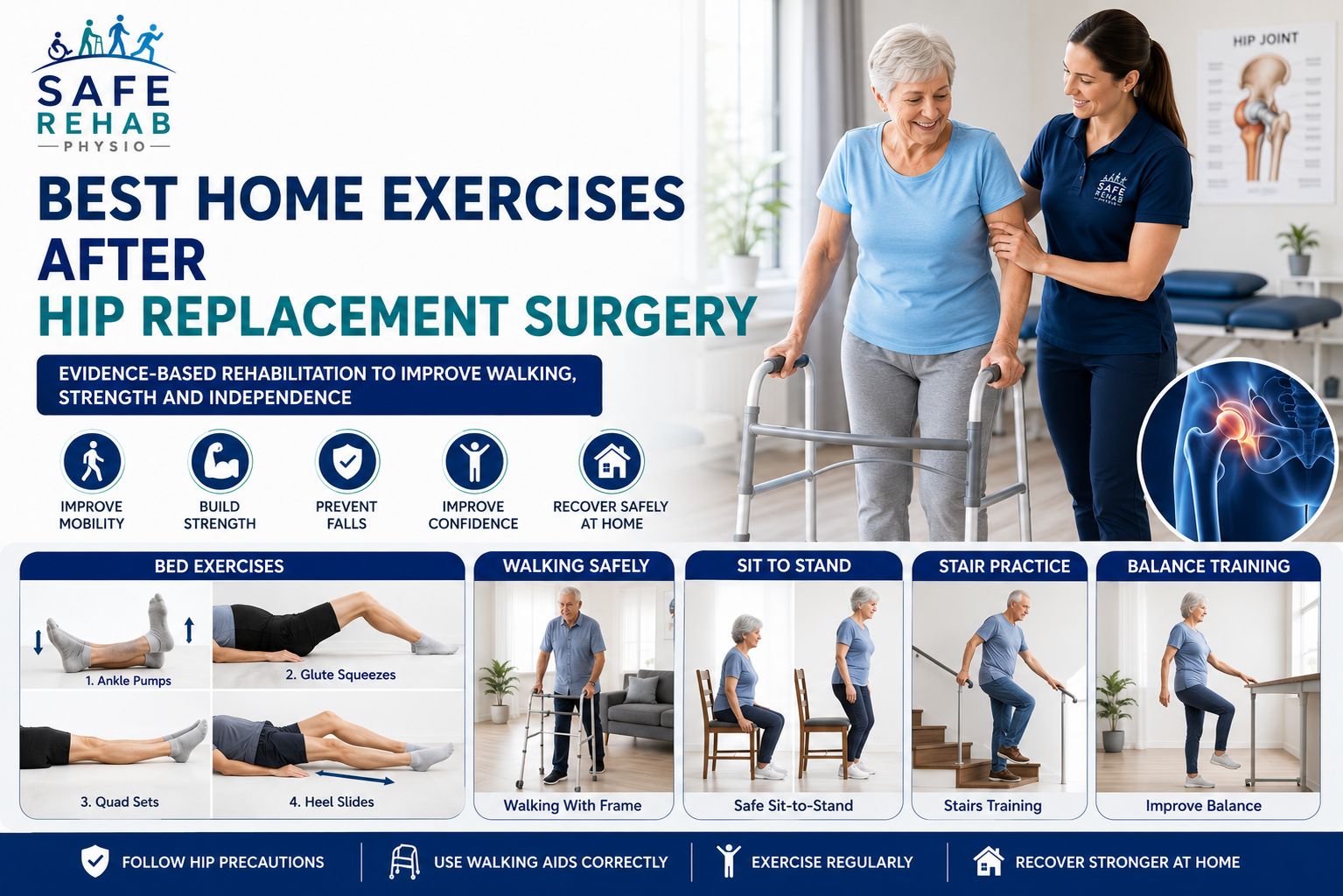
Evidence-Based Rehabilitation to Improve Walking, Strength and Independence
Hip replacement surgery can significantly reduce pain and improve mobility for people with severe hip arthritis and joint damage.
However, surgery alone does not automatically restore normal movement, balance, strength, or walking ability.
Recovery depends greatly on:
- Early physiotherapy
- Safe movement
- Walking rehabilitation
- Strengthening exercises
- Balance training
- Swelling management
- Functional rehabilitation
- Consistent home exercises
Many patients experience:
- Hip stiffness
- Pain
- Weakness
- Difficulty walking
- Reduced balance
- Fear of movement
- Difficulty climbing stairs
- Reduced confidence
The good news is that evidence-based physiotherapy and rehabilitation can help patients regain mobility, improve strength, and return to daily activities safely.
What Happens After Hip Replacement Surgery?
During hip replacement surgery, damaged parts of the hip joint are replaced with artificial components.
Although the surgery improves joint mechanics, the body still needs time to recover from:
- Surgical trauma
- Swelling
- Muscle weakness
- Pain
- Reduced movement
- Tissue healing
Immediately after surgery, many patients notice:
- Difficulty walking
- Hip weakness
- Pain while moving
- Reduced balance
- Difficulty getting out of bed
- Difficulty standing from chairs
- Fear of weight bearing
This is completely normal during the early recovery stage.
Understanding Hip Precautions
After surgery, patients are often advised to follow hip precautions to reduce stress on the healing hip joint.
Precautions may vary depending on the surgical approach used.
Common precautions may include:
- Avoid bending the hip excessively
- Avoid crossing the legs
- Avoid twisting suddenly
- Avoid low chairs or sofas
- Avoid pivoting on the operated leg
These precautions help protect healing tissues during the early stages of recovery.
A physiotherapist can explain these precautions safely and clearly based on the surgeon’s instructions.
Importance of Early Movement After Hip Replacement
Research strongly supports early mobilisation after hip replacement surgery.
Early movement helps:
- Improve circulation
- Reduce blood clot risk
- Reduce stiffness
- Improve muscle activation
- Improve walking ability
- Improve confidence
- Reduce complications from bed rest
- Improve independence
Movement is progressed gradually depending on:
- Pain levels
- Surgical advice
- Balance
- Strength
- Swelling
Safe guided rehabilitation is extremely important.
Safe Sitting and Standing After Hip Replacement
Many patients initially struggle with transfers after surgery.
Safe Sitting Tips
- Use a firm chair with armrests
- Keep hips slightly higher than knees
- Avoid low sofas
- Sit slowly with control
- Keep operated leg slightly forward initially if advised
Safe Standing Tips
- Push using armrests
- Stand slowly
- Maintain balance before walking
- Use walking aids correctly
Controlled transfers improve safety and confidence.
Walking Safely with a Frame or Crutches
Walking rehabilitation is one of the most important parts of recovery.
Most patients initially use:
- Walking frame
- Crutches
- Walking stick
Walking aids help:
- Improve balance
- Reduce fall risk
- Improve confidence
- Reduce stress on the operated hip
Important Walking Advice
- Walk slowly initially
- Use the correct walking pattern taught by the physiotherapist
- Avoid rushing
- Wear supportive footwear
- Keep pathways clear
Walking distance is gradually increased during recovery.
Best Bed Exercises After Hip Replacement Surgery
Exercises should be:
- Gentile
- Controlled
- Regular
- Progressive
Consistency is very important during recovery.
1. Ankle Pumps
How to perform
- Move ankles up and down repeatedly while lying in bed
Benefits
- Improves circulation
- Helps reduce swelling
- Helps reduce blood clot risk
2. Static Gluteal Squeezes
How to perform
- Tighten buttock muscles gently
- Hold for 5–10 seconds
- Relax slowly
Benefits
- Improves hip muscle activation
- Helps walking stability
- Improves strength
3. Static Quadriceps Exercises
How to perform
- Tighten front thigh muscles
- Push knee gently downward
- Hold for 5–10 seconds
Benefits
- Improves thigh strength
- Improves knee control
- Helps standing and walking
4. Heel Slides
How to perform
- Slide heel slowly toward buttocks
- Bend hip and knee comfortably
- Return slowly
Benefits
- Improves mobility
- Reduces stiffness
- Improves flexibility
Balance Training After Hip Replacement
Balance often becomes reduced after surgery because of:
- Weakness
- Pain
- Reduced confidence
- Reduced weight bearing
- Reduced mobility
Evidence-based balance rehabilitation may include:
- Weight shifting
- Standing balance
- Supported marching
- Walking practice
- Functional mobility training
Balance exercises help improve:
- Stability
- Walking confidence
- Reaction time
- Fall prevention
Muscle Strengthening After Hip Replacement
Strengthening exercises are extremely important because muscles weaken quickly after surgery and inactivity.
Important muscles include:
- Hip muscles
- Gluteal muscles
- Quadriceps
- Core muscles
Progressive strengthening may include:
- Sit-to-stand exercises
- Step exercises
- Standing hip exercises
- Walking progression
- Functional strengthening
Improved muscle strength helps:
- Walking
- Balance
- Stair climbing
- Transfers
- Independence
Stair Training After Hip Replacement
Many patients become fearful of stairs after surgery.
Physiotherapists help retrain:
- Safe stepping
- Balance control
- Weight transfer
- Confidence
General Stair Advice
Initially:
- Use handrails
- Move slowly
- Follow physiotherapy advice
Stair training is progressed gradually depending on:
- Strength
- Pain
- Balance
- Confidence
Fall Prevention Tips After Hip Replacement
Falls can seriously affect recovery after surgery.
Important fall prevention advice includes:
- Use walking aids correctly
- Remove loose rugs
- Improve lighting
- Wear supportive footwear
- Avoid slippery floors
- Keep walkways clear
- Avoid rushing
- Use handrails on stairs
- Keep frequently used items within reach
A physiotherapist can also assess home safety risks.
Returning to Normal Activities
Recovery varies between individuals.
Many patients gradually return to:
- Independent walking
- Household activities
- Stairs
- Outdoor mobility
- Social activities
- Gentile exercise
Recovery is usually gradual and progressive.
Consistency with rehabilitation is extremely important.
When Should You Seek Professional Physiotherapy Help?
You should seek professional assessment if you experience:
- Severe stiffness
- Difficulty walking
- Poor balance
- Increased pain
- Fear of movement
- Difficulty climbing stairs
- Persistent weakness
- Reduced confidence
- Slow recovery progression
Early physiotherapy intervention often improves long-term recovery outcomes. If you are experiencing any of these symptoms or need expert guidance, please Book an appointment with our specialists.
Final Thoughts
Hip replacement surgery is only one part of recovery.
Physiotherapy rehabilitation plays a major role in helping patients regain:
- Walking ability
- Strength
- Mobility
- Confidence
- Balance
- Functional independence
Evidence-based exercises, safe walking progression, balance training, and guided rehabilitation can significantly improve recovery after hip replacement surgery.
Early movement and consistent physiotherapy often lead to the best long-term results.
SAFE REHAB PHYSIO
Professional home physiotherapy services helping patients improve:
- Hip replacement rehabilitation
- Walking ability
- Balance
- Strength
- Mobility
- Confidence
- Functional independence
- Falls prevention
- Rehabilitation at home
Serving patients across Berkshire, Buckinghamshire, Herefordshire and surrounding areas in the UK.
Book an appointment today to start your personalized home rehabilitation program.
Evidence-Based Information
This article is based on evidence-based physiotherapy guidelines and internationally recognised hip replacement rehabilitation research.
📚 References
- NICE Hip Replacement Rehabilitation Guidelines
- American Academy of Orthopaedic Surgeons (AAOS) Hip Replacement Guidelines
- Enhanced Recovery After Surgery (ERAS) Society Recommendations
- Journal of Orthopaedic & Sports Physical Therapy (JOSPT) Hip Rehabilitation Research
- Cochrane Review on Hip Replacement Rehabilitation
- American Physical Therapy Association (APTA) Total Hip Arthroplasty Guidelines
- Evidence-Based Physiotherapy Following Hip Replacement Research
- Physiotherapy Rehabilitation After Total Hip Arthroplasty Studies
- CDC Physical Activity and Recovery Recommendations
- World Health Organization Rehabilitation Guidelines
Need Professional Home Physiotherapy?
Safe Rehab Physio provides expert home physiotherapy for post-operative recovery, post-fracture rehabilitation, pre-op conditioning, elderly mobility and falls prevention.